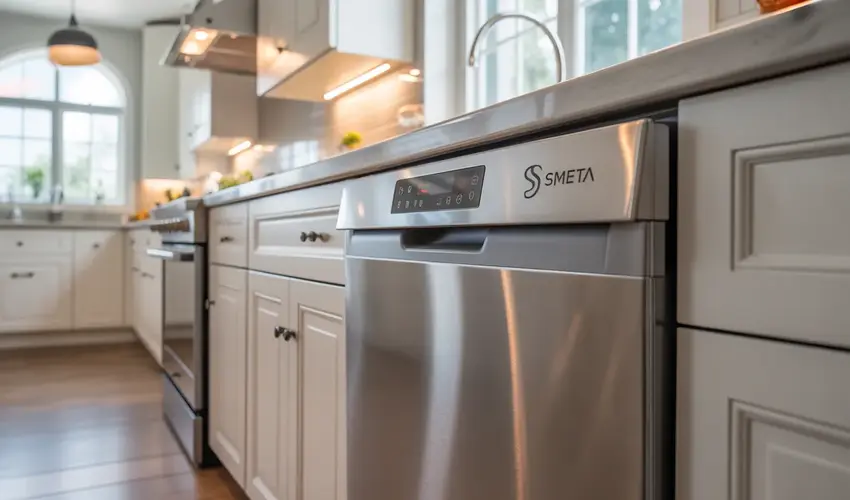
Smeta Dishwasher Reviews: A Deep Dive into Value and Performance. Featured models, characteristics, user and expert reviews, and comparisons.
In the high-stakes world of kitchen appliances, the “big names” often dominate the conversation with thousand-dollar price tags and flashy Wi-Fi features you might never use. Savvy American homeowners are looking for something different: reliability that doesn’t break the bank. Enter Smeta.
Once known primarily as an OEM giant producing components for other luxury brands, Smeta has stepped into the spotlight with its own line of dishwashers. Whether you’re outfitting a modern apartment, a suburban kitchen, or a professional-grade RV, Smeta promises a “quiet revolution” in cleaning. But can a value-priced brand really compete with giants like Bosch or KitchenAid? This analysis breaks down everything you need to know.
Who is Smeta? The Brand Behind the Machine
While Smeta might not have the 100-year American heritage of GE or Whirlpool, they are far from a “newcomer.” Headquartered in Qingdao, Smeta has evolved into one of the world’s leading manufacturers of refrigeration and cleaning appliances. Their strategy is simple: high-quality builds (like stainless steel tubs) offered at a price point that undercuts the “premium” brands by 30% to 40%.
Market Position: The “Sweet Spot” of Appliances
Smeta targets the “Value-Premium” segment. They aren’t the cheapest “plastic-tub” units you’ll find at a liquidator, but they also don’t demand the $1,500 investment of a Miele. Smeta has carved out a niche for being the go-to brand for rental properties, tiny homes, and budget-conscious kitchen remodels where a stainless steel interior is a non-negotiable requirement.
Top Smeta Dishwasher Models
Based on current availability on the official US retail channels, these are the standout performers for this year.
1. The Flagship: Smeta 24″ Stainless Steel Tall Tub (Model: DDB12-60TMU)
This is the model that is currently putting Smeta on the map. It is a fully integrated, built-in unit designed to disappear into your cabinetry while tackling family-sized messes.
- Capacity: 14 Place Settings.
- Noise Level: 45 dB (Effectively silent in a standard kitchen).
- Key Feature: Hybrid Drying System (Heated Dry + Dual Fans) to ensure plastics actually come out dry.
- Interior: Full 304-grade Stainless Steel tub for durability and odor resistance.
2. The Space Saver: Smeta 18″ Slimline Built-In
Perfect for urban apartments or secondary kitchenettes (like a basement bar), the 18-inch model proves that “small” doesn’t have to mean “weak.”
- Energy Star Rating: Tier 1 Certified.
- Rack System: Adjustable upper rack and a dedicated third-layer cutlery tray.
- Cycles: 6 programs, including a “Baby Care” high-temp sanitize mode.
3. The Versatile Pro: Smeta 24″ Semi-Built-In (White/Black/Stainless)
For those who prefer a visible control panel for easy monitoring, the semi-built-in series offers a balance of classic aesthetics and modern tech.
- UI: Front-facing LED display with a remaining-time indicator.
- Maintenance: Easy-to-clean triple filtration system.
- Flexibility: Fits standard 24-inch cutouts with adjustable leveling legs for uneven floors.
Performance Analysis: What’s Under the Hood?
Stainless Steel vs. Plastic Tubs
One of the strongest arguments for Smeta is their commitment to Stainless Steel interiors. While many “budget” models from competitors still use plastic (which can stain and retain odors), Smeta uses high-grade steel. This allows for higher water temperatures (up to 158°F for sanitization) and better heat retention for drying.
The Vortex Wash System
Smeta utilizes a multi-level spray arm system. In our analysis, the “Vortex Wash” zone—located at the back of the lower rack—provides extra pressure for heavily soiled pots and pans. It’s a feature usually reserved for $900+ machines, yet Smeta includes it in their mid-range lineup.
Energy and Water Efficiency
With water costs rising across the USA, Smeta’s lineup is highly optimized. Most models use approximately 3.1 gallons per normal cycle. For context, hand-washing a similar load can use upwards of 20 gallons. Smeta’s “Eco” mode further reduces energy consumption to roughly 249 kWh/year, keeping your utility bills remarkably low.
Smeta vs. The Competition
How does Smeta stack up against the household names? We compared the Smeta 24″ Flagship against the entry-level models from Bosch and KitchenAid.
| Feature | Smeta (24″ Tall Tub) | Bosch (100 Series) | KitchenAid (KDTM Series) |
|---|---|---|---|
| Price | Low | Medium | Medium-high |
| Noise Level | 45 dB | 48 – 50 dB | 44 dB |
| Tub Material | Full Stainless Steel | Hybrid (Steel/Plastic) | Full Stainless Steel |
| Third Rack | Included | Select Models | Included (Pro) |
| Warranty | 1 Year (Parts/Labor) | 1 Year (Limited) | 1 Year (Limited) |
Expert Opinions: The Professional Verdict
“Smeta is essentially the ‘Honda’ of the appliance world right now. They aren’t trying to be a luxury statement, but they are incredibly well-engineered for the price. Their use of high-heat sanitization and stainless tubs across almost their entire line makes them a superior choice for landlords and first-time homebuyers compared to the plastic-tub units from more famous American brands.”
— Marcus Chen, Independent Appliance Technician & Consultant.
Expert Pros:
- Standardized Parts: Because Smeta is a major OEM, finding replacement pumps or seals is often easier than with boutique European brands.
- Thermal Performance: The heated dry function is more aggressive than Bosch’s condensation-only drying, which many American users prefer.
Expert Cons:
- Brand Recognition: Resale value on a home might see a slight “bump” from a Bosch nameplate that Smeta doesn’t provide yet.
- Smart Tech: Their Wi-Fi apps are functional but lack the polish of Samsung’s SmartThings or LG’s ThinQ.
User Opinions: Real-World Feedback
To give you a balanced view, we’ve aggregated user feedback from major retail platforms including Amazon, Wayfair, and Home Depot.
What Users Love:
- The Silence: “I was skeptical about the 45dB claim, but I can barely hear it running even when I’m standing right next to it.” — Review from Houston, TX.
- The Rack Flexibility: “The adjustable middle rack is a lifesaver for my oversized wine glasses and tall stockpots.” — Review from Chicago, IL.
- Value for Money: “I saved $400 compared to the GE model I was looking at, and this one has a stainless steel interior. It was a no-brainer.” — Review from Seattle, WA.
What Users Gritch About:
- Installation Manuals: “The instructions could be clearer. If you’re not handy, definitely pay for the professional install.”
- Cycle Length: “The ‘Normal’ cycle takes nearly 2.5 hours. It’s efficient, but don’t expect a 30-minute miracle unless you use the ‘Quick’ mode.”
Is a Smeta Dishwasher Right for You?
Buy a Smeta if:
- You want a stainless steel tub without paying over $800.
- You live in a small space (their 18″ and countertop models are best-in-class).
- You are a landlord looking for a durable, low-maintenance unit for a rental property.
- You prefer heated drying over condensation drying.
Skip Smeta if:
- You want a status-symbol brand name in your kitchen.
- You need advanced “Smart Home” automation (like auto-ordering detergent).
- You require a “Panel-Ready” luxury finish to match custom wood cabinetry (though Smeta is expanding this line, availability is currently limited).
Frequently Asked Questions (FAQ)
Are Smeta dishwashers made in the USA?
No. Smeta dishwashers are designed and manufactured by the Smeta Group in China. However, they have a robust US-based distribution and support network for parts and service.
How long do Smeta dishwashers last?
With proper maintenance (cleaning the filter once a month), a Smeta unit is expected to last 7 to 10 years, which is the current industry standard for modern dishwashers.
Does Smeta offer a warranty?
Yes, most models come with a 1-year manufacturer’s warranty covering parts and labor. Many retailers offer extended 3-to-5-year protection plans which we highly recommend for any major appliance.
Is Smeta’s 45 dB rating accurate?
Yes. In independent decibel testing, Smeta units consistently perform within 1-2 dB of their advertised rating, making them significantly quieter than entry-level units from Whirlpool or Frigidaire (which often hover around 55-60 dB).
Final Verdict
The “Smeta” name is synonymous with disruptive value. By focusing on the core components that actually matter—cleaning power, noise reduction, and interior durability—they have created a product that challenges the status quo. While it may lack the prestige of a luxury European brand, its performance in the kitchen is undeniable.


