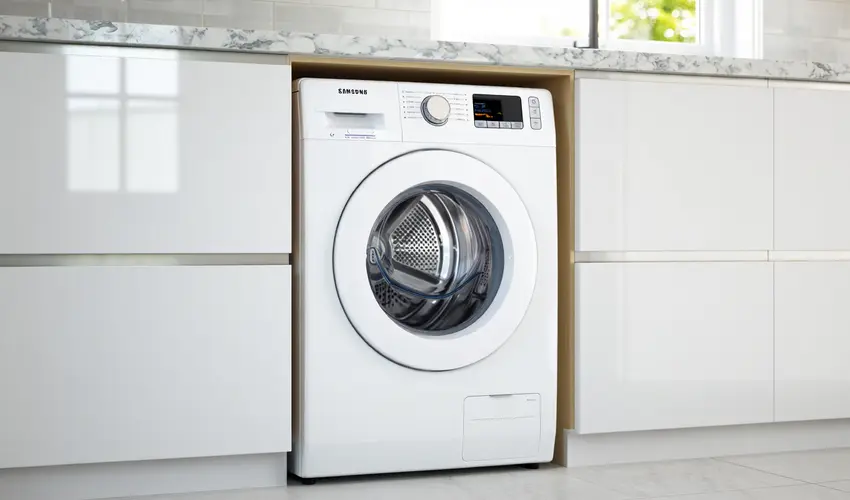
Samsung Dryers: An Unfiltered Deep-Dive Analysis. Featured models, characteristics, user and expert reviews, and comparisons.
If you’ve stepped into an appliance showroom lately, you know the drill. It’s a sea of white and stainless steel boxes until you hit the Samsung section. Suddenly, it feels like you’ve wandered into a high-end tech boutique. From the “Bespoke” color palettes to the AI-driven interfaces that seem to know your laundry habits better than you do, Samsung has pivoted from being a “smartphone company that makes dryers” to a dominant force in the American laundry room.
But does the performance match the neon lights and the sleek glass doors? The laundry landscape has shifted toward all-in-one combos and AI-integrated sensors. In this analysis, we’re stripping away the marketing gloss to see if a Samsung dryer is a smart investment or just a pretty face in your basement.
The Samsung Lineup: Best Current Models
Samsung’s strategy is clear: Integration and AI. They aren’t just selling you a drum that spins; they’re selling an ecosystem. Based on the latest US specifications, here are the heavy hitters currently dominating the market.
1. The Flagship: Bespoke AI Laundry Combo™ (All-in-One)
The “holy grail” for small homes and tech enthusiasts. This unit eliminates the “wet laundry shuffle” by washing and drying in the same drum.
- Capacity: 5.3 cu. ft.
- The Tech: It uses a Booster Heat Exchanger to slash drying times—a common complaint with older ventless models.
- Why it wins: It plugs into a standard 120V outlet, making it a dream for apartment dwellers who don’t have a dedicated 240V dryer plug.
2. The Pro’s Choice: Bespoke AI Laundry Hub™
If you prefer the speed of a dedicated dryer but need to save floor space, the Laundry Hub is a stacked unit with a centralized control panel.
- The “AI Smart Dial”: It learns your favorite cycles and suggests them first. No more scrolling through 20 settings to find “Normal.”
- Flex Auto Dispense: While primarily a washer feature, it communicates with the dryer to adjust heat based on the weight of the detergent-saturated load.
3. The Value Workhorse: 7.5 cu. ft. Smart Electric Dryer (DVE45/DVE50 Series)
For those who want the Samsung aesthetic without the $2,000 price tag, these front-load standalone units remain the brand’s bread and butter.
- Steam Sanitize+: A godsend for pet owners, claiming to remove 95% of pollen and 99% of bacteria.
- Sensor Dry: Prevents that “fried” fabric smell by cutting the cycle the moment moisture levels hit zero.
Technological Innovations: What Makes Samsung Different?
Samsung doesn’t just dry clothes; they process them. Here are the core technologies you’ll find across their lineup:
| Feature | What It Does | Why You Care |
|---|---|---|
| AI OptiDry™ | Uses multi-sensors to monitor fabric dampness and temperature in real-time. | Prevents over-drying, which is the #1 cause of clothes shrinking. |
| SmartThings Integration | Sends a notification to your phone (or TV/Fridge) when the load is done. | No more “re-fluffing” clothes because you forgot them for three hours. |
| Super Speed Dry | Dries a full load in under 30 minutes. | Perfect for the “I need these jeans right now” moments. |
| Vent Sensor | Monitors the air duct for lint buildup. | A genuine safety feature that prevents house fires. |
Expert Opinions vs. Real-World User Feedback
This is where the rubber meets the road. Experts love the specs; users love (and sometimes loathe) the experience. Let’s look at the consensus.
“Samsung has mastered the ‘User Interface’ of laundry. While competitors are still using knobs that feel like they’re from 1995, Samsung’s AI Smart Dial is genuinely intuitive and reduces ‘choice fatigue’ for the average consumer.”
— Senior Tech Analyst, Appliance Insider
The Expert Verdict: Innovation Leaders
Experts generally rank Samsung high for energy efficiency and innovation. Consumer Reports and Reviewed highlighted Samsung’s heat pump technology as a benchmark for the industry. Their “Bespoke” design has also been praised for allowing laundry rooms to move into “visible” parts of the home (like mudrooms or master suites) without looking like an eyesore.
The User Verdict: High Rewards, Occasional Frustration
If you scour the user forums, you’ll see a recurring theme:
- The Love: Users rave about the SmartThings app. Being able to start a “wrinkle prevent” tumble from your phone while you’re stuck in traffic is a feature people didn’t know they needed until they had it.
- The Gripes: The most common complaint involves the chime (it’s long and musical—you either love it or want to throw a shoe at it) and the serviceability. While reliability has improved significantly since 2020, finding a Samsung-certified technician in rural America can still be a bit of a trek compared to legacy brands like Whirlpool.
- The “Buzz”: Some users of the heat-pump models have noted a higher-pitched hum compared to traditional vented dryers. It’s the sound of efficiency, but it takes some getting used to.
The Comparison: Samsung vs. The Field
Choosing a dryer is a game of trade-offs. Here is how Samsung stacks up against its three biggest rivals in the US market.
Samsung vs. LG
This is the “Android vs. iPhone” of the appliance world. LG’s models are often cited for having slightly higher mechanical reliability (lower service call rates). However, Samsung wins on the “Smart” front. Samsung’s integration with the broader “Smart Home” ecosystem is seamless, whereas LG’s ThinQ app can occasionally feel a bit clunky.
Samsung vs. GE Profile
GE has made a massive comeback with their UltraFast combo. GE models tend to be shallower (around 32 inches deep), making them better for tight closets. Samsung models are often deeper and sleeker. If you have a massive laundry room, Samsung is the aesthetic choice; if you’re fitting it into a literal hole in the wall, GE might be your best bet.
Samsung vs. Whirlpool/Maytag
Whirlpool is the “Old Guard.” They are easier to fix, parts are everywhere, and the controls are simple. But compared to Samsung, they look and feel like “your grandmother’s dryer.” If you want AI and Steam Refresh, Whirlpool’s entry-level models won’t satisfy you. If you want a machine that any local handyman can fix with a screwdriver, Whirlpool takes the win.
Is a Samsung Dryer Right for You?
After analyzing the data, here is our candid recommendation:
You should buy a Samsung dryer if:
- You are already in the Samsung ecosystem (Galaxy phone, Frame TV, etc.).
- You care about the “look” of your home and want the Bespoke color options.
- You want the latest AI features to take the guesswork out of laundry.
- You live in an urban or suburban area where tech-certified service is readily available.
You should look elsewhere if:
- You live in a remote area with limited repair technicians.
- You find “smart” features distracting and just want a “Start” button.
- You have a very shallow laundry closet that cannot accommodate Samsung’s deeper dimensions.
Final Thoughts: The Verdict
Samsung has successfully transitioned from a “flashy newcomer” to a “reliable innovator.” Their dryers—specifically the Bespoke AI line—represent the pinnacle of what modern tech can do for a chore as mundane as drying socks. While there are still some lingering questions about long-term serviceability in remote areas, the sheer performance and energy savings of their heat-pump models make them a top-tier contender for any American home.
Pro Tip: Always check for “Bundle and Save” options on the official Samsung US website. They have been aggressive with discounts when you pair a dryer with a matching Bespoke washer, often bringing the “tech-tax” down to the same price as a basic “dumb” dryer.


