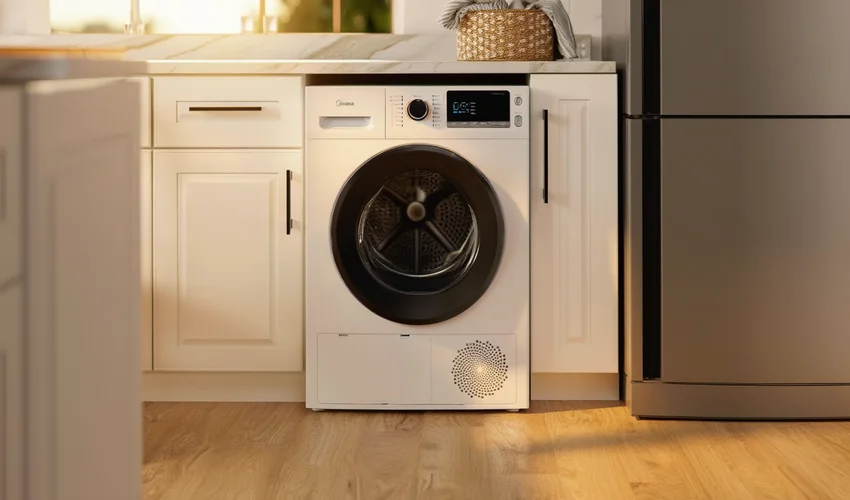
Midea Dryer Analysis: The Ultimate Guide to Value and Performance. Models, features, reviews and comparison.
For years, the American laundry market was dominated by a few legacy names. However, there have been a significant shift as Midea—a global powerhouse in appliance manufacturing—has firmly established itself as a top-tier contender in U.S. homes. Known for balancing advanced technology with aggressive pricing, Midea dryers are no longer just the “budget alternative”; they are a primary choice for smart homeowners.
In this comprehensive analysis, we explore the Midea dryer lineup, evaluate expert and user feedback, and see how they compare against giants like LG and Samsung.
Top Midea Dryer Models
Midea’s current U.S. catalog focuses on two distinct needs: high-capacity family powerhouses and space-saving ventless technology for urban living. Here are the standout models currently featured on the official Midea USA website.
1. The Family Workhorse: Midea MLE52N4AWW (8.0 Cu. Ft. Electric Dryer)
This is the flagship for most American households. With a massive 8.0 cubic foot capacity, it is designed to handle king-sized comforters and heavy family loads with ease.
- Key Feature: Sensor Dry technology that prevents over-drying by detecting moisture levels.
- Design: Reversible door for flexible installation in tight laundry closets.
- Special Cycles: Includes a Sanitize cycle (perfect for post-pandemic hygiene) and a Wrinkle Care option.
2. The Modern Specialist: Midea MLHE52S6BGG (Metallic Grey Series)
For those who want a premium look without the premium price tag, this model offers a sleek Metallic Grey finish and enhanced steam features.
- Steam Care: Deeply penetrates fabrics to remove wrinkles and odors without a full wash.
- Pure Steam: High-temperature steam that kills 99.9% of common household bacteria.
3. The Urban Solution: Midea MLE27N5AWWC (24-Inch Ventless Heat Pump Dryer)
At present, ventless technology is more popular than ever. This 4.4 cu. ft. compact unit is ideal for apartments and condos where external venting isn’t an option.
- Heat Pump Efficiency: Uses significantly less energy than traditional vented dryers.
- 16 Preset Cycles: Surprisingly versatile for its size, including Wool and Active Wear settings.
Expert Opinion: Performance & Engineering
Appliance experts generally praise Midea for its engineering efficiency. The consensus among technicians and reviewers highlights three main areas:
“Midea has mastered the ‘Value-to-Feature’ ratio. While other brands charge a premium for AI-driven sensors, Midea includes highly accurate moisture sensors in their mid-range models, making them more accessible to the average consumer.”
— Appliance Tech Insights
Pros Identified by Experts:
- Energy Star Rating: Most models exceed federal energy standards, leading to lower monthly utility bills.
- Quiet Operation: Midea’s Inverter Quattro motor technology has significantly reduced vibration and decibel levels.
- Ease of Repair: Unlike some boutique brands, Midea’s internal components are logically laid out, making them easier (and cheaper) to service.
User Reviews: The Real-World Experience
Customer feedback for Midea dryers remains largely positive, though there are specific caveats to keep in mind. Based on verified purchase data from major U.S. retailers:
The Positives:
- “The 8.0 cu. ft. capacity is a life-saver for my family of five. It actually dries a full load of towels in one cycle, which my old GE struggled with.” – Sarah M., Texas.
- “The ventless heat pump model is incredibly quiet. I have it in a closet right next to my home office and I barely hear it.” – Jason L., New York.
The Critiques:
- Cycle Times: Some users note that “Eco” modes can take longer than traditional dryers.
- App Connectivity: While the MSmartHome app is functional, some users find the initial Wi-Fi setup to be a bit finicky compared to LG’s ThinQ platform.
Midea vs. The Competition: Comparison
How does Midea stack up against the market leaders? This table compares the Midea MLE52N4AWW against its direct rivals.
| Feature | Midea (MLE52) | Samsung (Bespoke) | LG (ThinQ Series) |
|---|---|---|---|
| Capacity | 8.0 Cu. Ft. | 7.6 Cu. Ft. | 7.4 Cu. Ft. |
| Drying Tech | Sensor Dry + Steam | AI Optimal Dry | AI Sensor Dry |
| Price Point | $$ (Affordable) | $$$ (Premium) | $$$ (Premium) |
| Warranty | 1-Year Full / 2-Year Parts | 1-Year Full | 1-Year Full |
The Verdict: While Samsung and LG offer more “AI” bells and whistles, Midea wins on raw capacity and pure value. You are getting more drum space and similar sensor technology for roughly 15-20% less cost.
Final Analysis: Should You Buy a Midea Dryer?
Midea has proven that it is a heavyweight in the American appliance market. Their dryers are particularly well-suited for:
- Large Families: Who need the 8.0 cu. ft. capacity to tackle mountain-sized laundry piles.
- Budget-Conscious Techies: Who want sensor drying and steam features without the “brand tax.”
- Condo Owners: Who require high-efficiency, ventless heat pump technology.
If you prioritize a flashy brand name or the most advanced AI ecosystem, you might still look toward Samsung. However, if you want a reliable, high-capacity machine that does exactly what it promises—dries clothes efficiently and protects your fabrics—Midea is arguably the best value on the market today.
Ready to upgrade your laundry room? You can find these models at major retailers like Lowe’s, Home Depot, or directly through the Midea USA website.


