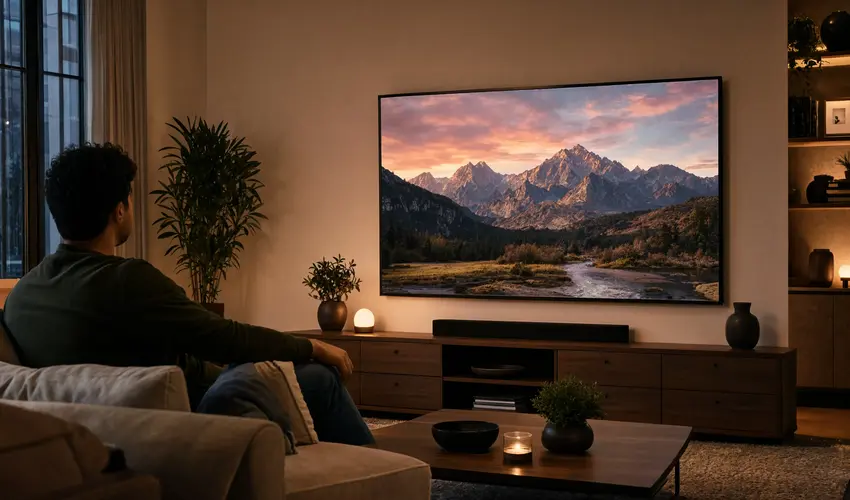
Vizio TV Analysis: a product of the American designer of televisions. Best models, characteristics, user and expert reviews, and comparisons.
Choosing the right television used to be a straightforward choice between a few legacy brands. Today, smart TV ecosystems and shifting retail partnerships have transformed the landscape. A prime example is Vizio, a brand long recognized for shaking up the US market by delivering premium display technologies at budget-friendly price points.
Following Walmart’s acquisition of the brand to expand the footprint of Vizio OS, Vizio has re-emerged with a streamlined, value-focused lineup. If you are looking for a new television, understanding where Vizio stands regarding picture quality, smart features, and competitive worth is essential.
This comprehensive analysis covers the current Vizio TV lineup, breaks down technical performance, shares real expert and user sentiments, and compares Vizio directly with its main budget and premium competitors.
The Current Vizio TV Lineup
Vizio has restructured its product tiers to focus strictly on what budget-conscious consumers and mainstream gamers want. Rather than competing in the ultra-premium $2,000+ OLED space, Vizio focuses heavily on high-performance LED, QLED (Quantum Dot), and Mini-LED options.
The current US lineup is categorized into distinct visual tiers:
- Mini-LED Quantum 4K (Quantum Pro Series): The current flagship tier. By utilizing thousands of miniature LEDs grouped into independent local dimming zones, these models mimic OLED-like contrast while reaching much higher peak brightness levels.
- Quantum 4K (M-Series Quantum / M-Series Quantum X): Mid-tier displays that utilize traditional LED backlights paired with a Quantum Dot filter. This layer significantly expands the color palette, offering rich, lifelike hues perfect for movies and modern consoles.
- 4K UHD (V-Series): The baseline 4K tier built for maximum value. These models cut out advanced color filters and complex local dimming arrays to offer standard 4K resolution at highly accessible prices.
- Quantum Full HD & HD: Compact powerhouses designed for kitchens, dorm rooms, or small bedrooms, maintaining smart functionality on a smaller scale (24-inch to 43-inch screens).
Detailed Analysis of the Best Vizio TV Models
To understand how these tiers perform in real-world environments, let’s look closely at the specific standout models dominating the current market.
1. Vizio Quantum Pro Mini-LED 4K (Flagship Choice)
The Quantum Pro Series is Vizio’s most ambitious hardware offering, available primarily in larger 65-inch and 75-inch variants. It bridges the gap between high-end performance and mid-range pricing.
Key Specs: 120Hz native refresh rate, 4K resolution, Mini-LED backlight configuration, 4 HDMI 2.1 ports, AMD FreeSync Premium Pro support.
The Standout Features: The presence of four fully compliant HDMI 2.1 ports is a massive benefit for multi-console households. Gamers can connect a PlayStation 5, Xbox Series X, and a gaming PC simultaneously without sacrificing performance. It also supports 240Hz refresh rates when dropped down to 1080p resolution, providing ultra-smooth, PC-grade responsiveness.
- Picture Quality Performance: Thanks to its high density of local dimming zones, the Quantum Pro minimizes “blooming”—the distracting halo effect where bright text appears against dark backgrounds. Its peak brightness effortlessly fights daytime glare in sunlit living rooms, making HDR10+ and Dolby Vision content look vibrant and impactful.
2. Vizio M-Series Quantum X (The Gamer’s Sweet Spot)
For years, the M-Series has represented the sweet spot of the Vizio lineup, bringing high-end gaming traits down to mid-tier pricing.
Key Specs: 120Hz native refresh rate (up to 240Hz at 1080p), Quantum Dot color layer, active full-array local dimming, Vizio OS.
The Standout Features: The M-Series Quantum X brings P-Series grade performance into an accessible package. It features low input lag (under 7ms) and supports Variable Refresh Rate (VRR) to eliminate screen tearing during intense gameplay.
- Picture Quality Performance: While its backlight system isn’t as precise as the Mini-LED Quantum Pro, it handles color beautifully. The Quantum Dot layer produces deeply saturated reds and greens. However, because it has fewer local dimming zones, dark movie scenes can occasionally look slightly gray rather than pure black.
3. Vizio V-Series 4K UHD (The Budget Champion)
If you need a reliable screen for a casual viewing space, a guest bedroom, or a rental property without spending a fortune, the standard V-Series remains a highly popular option.
- Key Specs: 60Hz refresh rate, 4K UHD resolution, 3 HDMI ports (including 1 eARC), Vizio OS smart platform.
The Standout Features: Despite its low price point, Vizio doesn’t strip away essential smart integration. The V-Series still features a highly responsive game mode with Auto Low Latency Mode (ALLM) and variable refresh rate support for casual gaming.
- Picture Quality Performance: It provides a sharp 4K picture, but lacks the brightness needed for true HDR performance. Without local dimming or a Quantum Dot color filter, contrast is limited, meaning dark scenes can look flat in a dark room. It performs best in moderately lit spaces with standard HD or 4K streaming content.
Vizio OS: The Smart TV Experience
Every modern Vizio television runs on Vizio OS. The platform has undergone significant software overhauls over the last few years, turning what used to be a sluggish, casting-dependent interface into a self-contained smart hub.
The Streaming App Ecosystem
Vizio OS natively hosts all major streaming apps, including Netflix, Prime Video, Disney+, Max, YouTube, and the newly added DIRECTV app. Navigating the home screen is simple, featuring categorized rows, personalized rows, and a dedicated Sports Zone that compiles team pages, live schedules, and broadcasting sources so sports fans can find their games instantly.
WatchFree+
One of Vizio’s biggest selling points is WatchFree+, an integrated, out-of-the-box streaming service requiring no subscriptions or credit cards. It provides over 300 live virtual channels and a massive on-demand library containing more than 30,000 movies and shows. Vizio continuously updates this hub, regularly rolling out themed movie collections, cloud gaming trials via partners like Blacknut, and sports hubs.
Connectivity and Smart Home Integration
Vizio TVs feature excellent smart home compatibility. They support Apple AirPlay 2 and Google Cast natively, allowing you to mirror content directly from an iPhone, iPad, or Android device. Additionally, they interface smoothly with Amazon Alexa, Google Assistant, and Apple Home, letting you adjust volume or power on the display using smart speakers. The companion Vizio Mobile App acts as a fully functional digital remote, letting you browse apps, type out search queries, and even stream WatchFree+ content directly on your phone.
Expert and User Opinions: What the World Thinks
To get a complete picture of Vizio’s value proposition, we must weigh empirical laboratory testing against daily consumer usage.
Expert Reviews & Technical Testing Sentiments
Professional TV reviewers consistently praise Vizio for its aggressive pricing strategy. Testers frequently emphasize that Vizio manages to put advanced gaming features—such as 120Hz native panels, VRR, and low input lag—into price brackets where competitors only offer standard 60Hz displays.
However, experts point out a few consistent design compromises:
The Upscaling Engine: While Vizio’s IQ Ultra processor handles native 4K and clean 1080p streaming gracefully, it struggles slightly when upscaling low-resolution content, such as old 480p DVDs or standard-definition cable broadcasts. Images can sometimes look a bit soft compared to premium upscaling engines.
- Out-of-the-Box Color Accuracy: Experts note that Vizio TVs often require a quick trip into the settings menu upon unboxing. The default “Vivid” profiles can clip highlights and oversaturate skin tones. Switching the TV over to “Calibrated” or “Filmmaker Mode” typically solves these issues instantly.
- The Absence of ATSC 3.0: Most current Vizio models omit next-generation ATSC 3.0 tuners for over-the-air 4K broadcasts, relying instead on older ATSC 1.0 hardware.
User Reviews & Everyday Consumer Feedback
On retail platforms and community forums, everyday users give Vizio high marks for its overall value and user-friendly interface. Families frequently cite WatchFree+ as an excellent way to cut the cord without adding another monthly bill.
Common user complaints typically revolve around long-term software stability and design quirks:
- Interface Lag: Some users report that after a major firmware update, the home screen can occasionally experience brief stuttering or navigation lag while loading banner ads.
- Automatic Preset Adjustments: A minor annoyance cited by users is the TV’s tendency to automatically switch its picture presets when it detects a change in the incoming signal type (like switching from an SDR streaming app to a HDR console game), occasionally requiring manual correction.
- Viewing Angles: On models using VA (Vertical Alignment) panel technology, users notice that while contrast is excellent when sitting directly in front of the screen, colors wash out slightly if you sit far off to the side.
Brand Comparison: Vizio vs. The Competition
To determine if a Vizio TV is the right choice for your home, it helps to see how the brand stacks up directly against its two primary sets of competitors: value-driven rivals and premium giants.
| Feature / Aspect | Vizio | Hisense & TCL (Value Rivals) | Samsung & Sony (Premium Rivals) |
| Primary Value Focus | Gaming specs for less; great free live TV ecosystem (WatchFree+). | Ultra-high peak brightness; aggressive Mini-LED zoning. | Top-tier processing; superior upscaling; premium physical builds. |
| Smart TV Interface | Vizio OS (Clean, highly organized, integrated sports/free TV hubs). | Google TV or Roku TV (Massive app library, highly customizable). | Tizen OS (Samsung) / Google TV (Sony) (Smooth, fast, feature-rich). |
| Gaming Infrastructure | Excellent. Low latency and multiple HDMI 2.1 ports on mid-to-high tiers. | Great, but HDMI 2.1 port availability varies widely on budget tiers. | Phenomenal gaming hubs, but you pay a massive premium for it. |
| SD / Low-Res Upscaling | Moderate. Best suited for modern HD and 4K digital streams. | Good. Solid mid-tier noise reduction algorithms. | Industry-Leading. Excellent clarity on cable and vintage media. |
Vizio vs. Hisense & TCL (The Battle for Value)
This is Vizio’s primary battleground. Hisense and TCL have captured massive market share by pushing the limits of Mini-LED backlighting, often delivering televisions with incredible peak brightness numbers.
Where Vizio holds its own against these budget titans is in gaming integration and out-of-the-box smart software. While some Hisense or TCL budget options only provide one or two high-bandwidth HDMI 2.1 ports, Vizio frequently supplies full-spec port arrays on its higher tiers. Furthermore, Vizio OS offers a more cohesive, ad-supported free entertainment hub via WatchFree+ compared to the sometimes cluttered Google TV implementations found on rival budget brands.
Vizio vs. Samsung & Sony (Value vs. Premium Luxury)
Comparing Vizio to Samsung or Sony comes down to your budget and performance expectations. Samsung and Sony dominate the high-end market with pristine OLED panels, incredible physical builds, and industry-leading upscaling processors that make low-resolution cable television look remarkably sharp.
Vizio cannot match Sony’s processing power or Samsung’s ultra-premium design aesthetics. However, Vizio wins comfortably on pure value. A consumer can purchase a flagship-tier 65-inch Vizio Mini-LED television for a fraction of the cost of an equivalent premium tier model from Sony or Samsung. If your viewing consists primarily of 4K streaming via Netflix, Disney+, or YouTube, and next-gen gaming, the visual differences during everyday viewing do not always justify the steep price increase of the luxury legacy brands.
Final Verdict: Is a Vizio TV Right For You?
Vizio has successfully solidified its position as a dominant force in the value-driven television market. By stripping away costly, experimental display form factors and focusing on optimizing high-refresh-rate gaming, vibrant Quantum Dot color layers, and accessible smart features, they provide high-quality screens that don’t drain your bank account.
You should buy a Vizio TV if:
- You are a console or PC gamer looking for advanced gaming tech like 120Hz, 240Hz PC modes, VRR, and low input lag without paying premium prices.
- You want a comprehensive, built-in free entertainment ecosystem like WatchFree+ to enjoy live television content without paying for a cable or streaming sub.
- You need a highly competent, bright 4K smart TV for a mainstream living room or bedroom and prefer to maximize your screen size per dollar spent.
You should look elsewhere if:
- You are a home theater purist who demands the flawless, pixel-level black levels that only an OLED display can produce.
- You watch a substantial amount of low-resolution legacy media, such as standard-definition cable or old DVDs, and require a top-tier upscaling engine.
- You require perfect, ultra-wide side viewing angles for a very wide, wraparound seating arrangement in a large theater room.
With its strategic alignment under Walmart’s retail umbrella and a software platform tailored for modern cord-cutters, Vizio remains one of the smartest economic choices in the consumer electronics landscape today.


| ao.com | CNET | Consumer Reports |
| Coolblue | Currys | Find thisbests |
| Flipkart | Gadgets 360 | Reviewed |
| OneClearWinner | Wirecutter | AVForums |
| Digitec | RTINGS | |
| Tom's guide | TechGadgetsCanada | TechRadar |