The Nothing Smartphone Revolution: Is Design Enough to Challenge the Giants? Features models, user and expert reviews, and comparisons.
In the fiercely competitive, rectangle-dominated world of modern smartphones, standing out is no easy feat. For years, the industry felt stagnant, with incremental updates in processing power and camera megapixels masquerading as innovation. Then came Nothing.
Founded by Carl Pei, the co-founder of OnePlus known for creating enthusiast-driven “flagship killers,” Nothing launched with a audacious promise: to make tech fun again. Their method? A striking, transparent design philosophy, a minimalist approach to software, and an emotional connection to technology that many users felt had been lost.
But does transparency equate to substance? Can a startup from London genuinely challenge the entrenched duopoly of Samsung and Apple, or the software prowess of Google? This complete analysis of Nothing smartphones dives deep into their unique philosophy, examines their most outstanding recent models obtained directly from their USA official presence, synthesizes expert and user opinions, and pits them against the giants of the industry to see if they are worth your hard-earned dollars.
1. The Nothing Philosophy: Stripping Away the Barriers
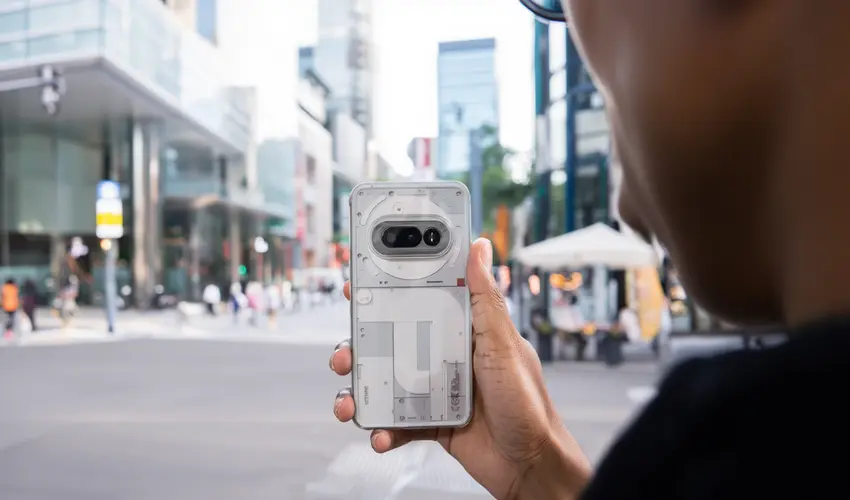
Nothing’s brand identity is fundamentally rooted in its design language. When the Nothing Phone (1) first arrived, it didn’t look like anything else on the market. The signature move was transparency—exposing the internal architecture of the device in a stylized, artistic way. While other brands hide their internals behind opaque glass or plastic, Nothing celebrates the engineering.
The Glyph Interface: More Than Just Bling?
The centerpiece of this design is the Glyph Interface. This is not just decorative lighting; it’s designed to fundamentally change how you interact with your phone. A series of LED strips on the back of the device serve as customizable notification lights, a recording indicator, a battery filling bar, and even a ring light for the camera.
The goal, according to Nothing, is “essentialism.” By assigning specific light patterns to certain contacts or apps, you can stay informed without being glued to your screen, potentially reducing screen time. Critics have labeled it a gimmick, but many users find it genuinely functional once integrated into their daily routine.
Nothing OS: The Art of Less
Nothing’s approach extends seamlessly into its software. Nothing OS is a minimalist, bloatware-free take on Android that strips away unnecessary features to prioritize speed and fluid aesthetics. It features bespoke dot-matrix typography, monochrome icon packs, and custom widgets designed to provide information at a glance without being distracting.
This commitment to simplicity means that Nothing OS doesn’t offer the myriad of customization options found in Samsung’s One UI or the AI-heavy ecosystem integrations of a Google Pixel. It is designed to be lean, respectful of user privacy, and focused purely on providing a smooth daily experience.
2. Outstanding Recent Models: What’s Available in the USA?
Nothing has been agile in its product rollouts, recently expanding its lineup to cover different price points. As of our latest analysis, obtained from the official USA presence, the following are the most outstanding models defining the brand’s current trajectory:
Nothing Phone (2): The Premium Cornerstone
While newer models have shifted focus, the Phone (2) remains the cornerstone of Nothing’s identity, representing its move from a budget startup into the premium mid-range space. Released as the direct successor to the Phone (1), it brought significant upgrades in performance and build quality.
Key Specs (USA):
- Processor: Qualcomm Snapdragon 8+ Gen 1 (a flagship-level chip, providing exceptional speed and efficiency).
- Display: 6.7-inch Flexible LTPO AMOLED with a 1–120 Hz adaptive refresh rate (energy efficient and incredibly smooth).
- Build: Premium glass back with a sculpted aluminum frame.
- Glyph Interface: Features the second generation, with more segments and increased functionality.
- Key Feature: Supports 15W Qi Wireless Charging and 5W Reverse Charging.
The Phone (2) is for the user who wants the complete Nothing aesthetic without compromising on performance. It competes directly with flagship devices like the base iPhone 15 or Google Pixel 8.
Nothing Phone (2a) & (2a) Plus: The Power of ‘a’
With the Phone (2a) series, Nothing made an aggressive pivot toward affordability. This series retains the brand’s signature design language—including the Glyph Interface and transparent back—but achieves a much lower price point by making surgical hardware tradeoffs. The Phone (2a) became a massive success, driving brand growth in 2024.
Phone (2a) Highlights (USA):
- Processor: MediaTek Dimensity 7200 Pro (a potent mid-range chip optimized for Nothing OS).
- Build: Uses a unibody plastic back instead of glass, making it lighter and more durable (though more prone to fingerprints).
- Display: 6.7-inch Flexible AMOLED (non-LTPO), providing vibrant colors and deep contrasts.
- Glyph Interface: Simplified, but still offers the core functionality.
- Key Feature: Exceptionally large 5,000mAh battery providing robust all-day use.
The **Phone (2a) Plus** represents a “boosted” version, unearthing a metallic finish, a faster processor (Dimensity 7350 Pro), and an upgraded front camera, targeting users who want mid-range value with a bit more punch.
Nothing Phone (4a) Series: The New Power Players
Most recently, Nothing unveiled the Phone (4a) series, pushing the boundaries of what consumers will pay for mid-range smartphones while incorporating high-end features like advanced periscope zoom. This represents Nothing’s strategy of offering premium specifications at slightly higher mid-tier price points.
Phone (4a) Pro Key Specs:
- Build: Metal unibody build, only 7.95mm thick, with a “refined transparent design” limited to the camera module.
- Camera System: Advanced trio of 50MP cameras on the back, supporting 4K Ultra XDR video and Dolby Vision.
- Zoom: Includes a 50MP OIS **periscope camera** supporting up to **70x ultra zoom** (3.5x optical), minimizing the camera bump by 32% compared to previous pro models.
- Durability: IP68 dust and water resistance.
3. Synthesis of Opinions: Experts vs. Users
To understand the true value of Nothing smartphones, we must synthesize the consensus among technology reviewers and the people who actually use these devices every day.
What the Experts Say (Consensus)
Technology journalists generally praise Nothing for its refreshing approach to design and software, but they are often critical of the “startup growing pains.”
- PROS: Unique aesthetic that stands out; Nothing OS is exceptionally clean and fluid, widely considered one of the best Android skins; Glyph Interface provides genuine utility once learned; The ‘a’ series (2a/2a Plus) offers incredible value for the money.
- CONS: Camera performance, while solid, often lacks consistency compared to Google Pixel or Samsung; The startup nature can mean slower software bug fixes compared to the giants; raw performance (even on the Phone (2)) is often a generation behind the absolute latest Snapdragon flagships; Limited USA carrier support for certain models can be frustrating.
What the Users Say (Community Consensus)
Nothing has developed a highly loyal community, often reminiscent of early OnePlus fans. They are passionate about the brand’s mission but vocal about its flaws.
- PROS: Extreme satisfaction with the monochrome aesthetics and Nothing OS minimalism—many users claim they can’t go back to bloated interfaces; Battery life on models like the (2a) is frequently described as “spectacular”; The sense of belonging to a new, artistic brand.
- CONS: Minor but persistent software bugs; frustration with aggressive RAM management that can close apps in the background; concerns about the long-term durability of the plastic backs on the ‘a’ series; some users find the Glyph Interface to be truly a gimmick that they disable after the first week.
4. Comparison with Giants: How Do They Stack Up?
The crucial question for American buyers is how Nothing compares to the safe bets: Google and Samsung.
| Feature | Nothing Phone (2a)/(2a) Plus | Google Pixel 8a/9A | Samsung Galaxy A55/A56 |
|---|---|---|---|
| Design | Revolutionary, transparent, Glyph Interface. Stands out massively. | Functional, iconic, “Visor” camera bump. Polished but conventional. | Polished, glass/metal, “Galaxy” identity. Traditional premium feel. |
| Software | Nothing OS: Minimal, bloat-free, monochrome aesthetics. Extremely fluid. | Pixel UI: Clean, AI-integrated, immediate updates. The “smartest” Android. | One UI: Feature-rich, ecosystem-integrated, deep customization. Feature-packed but heavier. |
| Camera | Good mid-range consistency. (4a Pro introduces high zoom). | **Industry Leader** in mid-range processing, computational photography, and AI editing (Magic Eraser). | Reliable, versatile sensors, good ecosystem features. |
| Performance | Capable MediaTek mid-range chips. Focused on software optimization. | **Flagship Tensor Chip** (G3/G4): Strong performance, but Tensor is known for heating and efficiency issues. | Capable Exynos/Snapdragon mid-range chips. Consistent but often slower than Tensor. |
| Long-Term Support | Typical startup: 3 years OS / 4 years security (solid). | **Industry Leader**: Up to 7 years of full OS and security updates. | **Strong**: Up to 4 years OS / 5 years security (highly reliable). |
Nothing vs. Google Pixel
This is the battle for clean Android. The comparison often comes down to personal priority. If you value **unique design, aesthetic consistency, and raw interface smoothness**, Nothing is a strong choice. If you prioritize **having the absolute best computational camera, advanced AI features, and the longest guaranteed software support**, Google Pixel remains undefeated in the mid-range.
Nothing vs. Samsung Galaxy A Series
This is the battle between the challenger and the incumbent. Samsung offers a safer, more predictable experience. Samsung One UI is deeper and more integrated into an ecosystem of wearables, tablets, and TVs. Samsung camera hardware is typically excellent, and their brand recognition is ubiquitous. Nothing wins on **freshness, excitement, minimalism, and aesthetic appeal**, making it the choice for users who are simply bored with the traditional smartphone landscape.
Conclusion: The Verdict on Nothing
Nothing smartphones are no longer just an ambitious concept; they are tangible, desirable alternatives in a mature market. Their transparent design philosophy, the utility of the Glyph Interface, and the lean beauty of Nothing OS provide a refreshing and genuinely different smartphone experience.
They are not perfect. Their cameras are good, not groundbreaking. Their raw performance is rarely the absolute latest. As a startup, Nothing is still scaling its operational and customer support networks.
Are they worth it?
If you are looking for the absolute best value-for-money, purely calculated by specifications per dollar, you might find a safer bet in a highly discounted Google Pixel A-series or a robust Samsung Galaxy A-series. Those are rational choices. However, if you are tech-bored, if you value aesthetics as a functional part of your experience, and if you want to support a company that dares to bring artistry back to electronics, a Nothing smartphone is a compelling, emotional purchase.
The question is no longer “Will Nothing survive?” but rather, “How much better can Nothing get?” For a tech startup, that is an extraordinary achievement.


